
Views: 0 Author: Site Editor Publish Time: 2025-12-26 Origin: Site
There comes a time in every kitchen's life when the faucet needs to go. Maybe it’s dripping incessantly, the finish is chipped and dated, or perhaps you're doing a full renovation to create the culinary space of your dreams. Whatever the reason, removing an old faucet is often the first obstacle standing between you and a fresh, new look.
While plumbing tasks can feel intimidating, disconnecting a kitchen faucet is actually a very manageable DIY project. You don't need a professional plumber's license or a van full of expensive equipment—just the right tools, a bit of patience, and clear instructions. By doing it yourself, you can save a significant amount of money on labor costs, which you can then reinvest into a high-quality replacement fixture (perhaps something sleek from Yeelim Hardware).
This guide will walk you through the entire process, from shutting off the water valves to lifting the old unit out of the sink. We will cover the tools you need, safety precautions, and specific tips for handling different types of setups, including the popular single-lever kitchen faucet. Let's get that old hardware out so you can upgrade your kitchen.
Before you dive under the sink, it is crucial to gather your supplies. Having everything within arm's reach will save you from scrambling around while you're squeezed into a tight cabinet space.
Tool | Purpose |
Adjustable Wrench | Used for loosening supply line nuts and mounting hardware. |
Basin Wrench | Essential for reaching nuts located high up behind the sink basin where standard wrenches can't fit. |
Bucket or Pan | Catches residual water left in the pipes. |
Old Towels/Rags | For wiping up spills and cleaning grime. |
Penetrating Oil (e.g., WD-40) | Helps loosen rusted or stuck nuts. |
Safety Glasses | Protects your eyes from falling debris (rust, dried putty) while working underneath. |
Flashlight/Headlamp | Illuminates the dark space under the cabinet. |
Under-sink cabinets are often crowded with cleaning supplies, trash bags, and miscellaneous items. Clear everything out to give yourself ample room to maneuver. Lay down an old towel on the floor of the cabinet to catch drips and cushion your back.
This is the most critical step. Never attempt to disconnect any plumbing fixture without shutting off the water first.
Look inside the cabinet under the sink. You should see two valves (usually oval-shaped knobs) connected to the pipes coming out of the wall or floor. One controls hot water, and the other controls cold.
1. Close the Valves: Turn both handles clockwise (to the right) until they stop.
2. Verify the Shut-off: Turn on the faucet handles above the sink. If the water stops flowing completely, you are safe to proceed.
3. Relieve Pressure: Leave the faucet handles in the "on" position to drain any remaining pressure and water from the lines.
Note: If your shut-off valves are stuck or you can't find them, you may need to shut off the main water supply to the entire house.
Now that the water is off, you need to disconnect the lines connecting your home's plumbing to the faucet itself.
1. Position Your Bucket: Place a bucket or shallow pan directly under the supply line connections to catch any water trapped in the hoses.
2. Loosen the Nuts: Use your adjustable wrench to loosen the nuts connecting the supply lines to the shut-off valves.
3. Detach the Lines: Once loose, you can usually finish unscrewing them by hand. If your faucet has a sprayer, you will need to disconnect that line as well.
If you are dealing with an older single-lever kitchen faucet, the connections might be slightly different than a two-handle model, but the principle remains the same: trace the lines from the faucet base down to the source and disconnect them.
This is often the most challenging part of the process due to the awkward angle and potential corrosion. The faucet is held to the sink deck by mounting nuts located underneath the counter.
Because the space behind the sink bowl is tight, a standard wrench often won't fit. This is where the basin wrench becomes your best friend. Its pivoting jaw allows you to reach up vertically and grip the nuts.
1. Locate the Nuts: Shine your flashlight up behind the sink bowl to find the nuts securing the faucet.
2. Apply Penetrating Oil: If the nuts look rusted or calcified, spray them with penetrating oil and let it sit for 15–20 minutes. This can make a world of difference.
3. Unscrew: clamp the basin wrench onto the nut and turn counter-clockwise to loosen. Once they are loose, remove them by hand.
If you have a separate side sprayer or a pull-down model, ensure it is fully disconnected.
· Side Sprayer: Unscrew the mounting nut holding the sprayer housing to the sink deck.
· Pull-down Hose: These often use a "quick connect" fitting. Squeeze the tabs or remove the clip to release the hose.
With the water lines disconnected and the mounting nuts removed, the faucet should now be free.
1. Lift Gently: From above the sink, grab the faucet body and lift it straight up. It might stick slightly due to old caulk or plumber's putty.
2. Wiggle if Needed: If it resists, wiggle it gently back and forth to break the seal. Do not force it, as you don't want to damage the sink surface.
3. Clean the Area: Once the faucet is out, you will likely see a ring of grime or old putty. Use a putty knife (carefully) and some cleaner to scrape this away so the surface is pristine for your new installation.
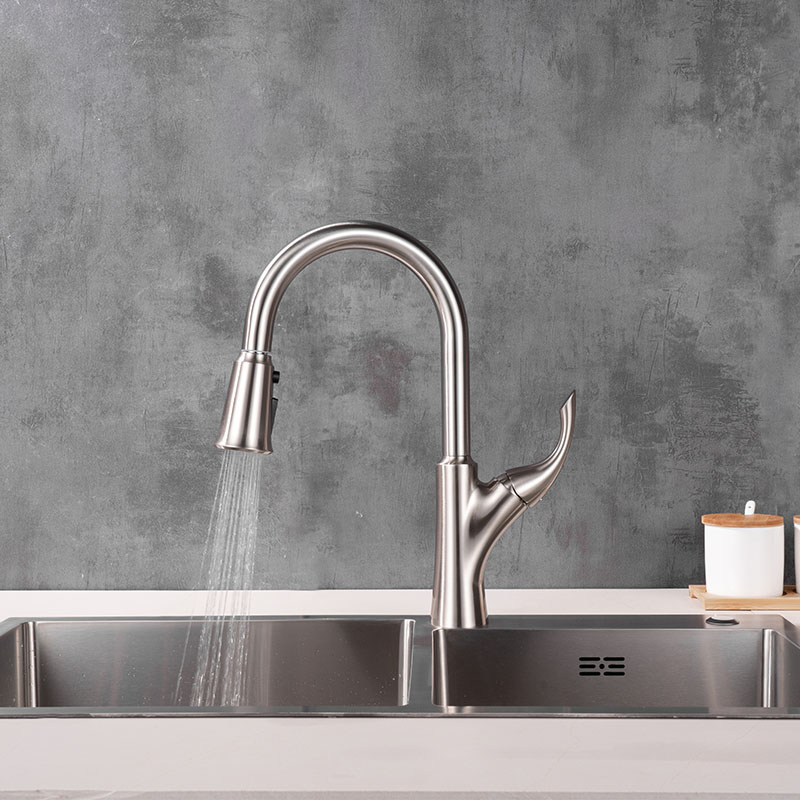
Now that the old unit is gone, you have a blank canvas. If you are looking for durability and style, consider upgrading to a high-quality model. Single-lever kitchen faucets are incredibly popular for their ease of use and modern aesthetic, allowing you to control flow and temperature with one hand.
For reliable options, you might explore the range at Yeelim Hardware. As a comprehensive production enterprise with over 27 years of experience, they integrate R&D, production, and sales to offer premium copper faucets and kitchen products. Whether you need a sleek pull-down model or a classic design, choosing a reputable manufacturer ensures your new installation lasts for years.
Even with a guide, things don't always go perfectly. Here are solutions to common removal headaches:
· Rusted Nuts Won't Budge: If penetrating oil doesn't work, you may need a nut splitter tool, which cracks the nut without damaging the threads, or a hacksaw to cut the bolt (as a last resort).
· Spinning Faucet: If the whole faucet spins when you try to turn the nut, have a helper hold the faucet steady from above while you work underneath.
· Cramped Space: If you physically cannot reach the plumbing, consider removing the cabinet doors to give yourself more elbow room.
Congratulations! You have successfully disconnected your kitchen faucet. You have saved money on a service call and gained the confidence to tackle more home improvement projects.
The next step is installation. Ensure you measure the number of holes in your sink (1, 2, 3, or 4) to buy the correct replacement, or purchase a deck plate (escutcheon) to cover extra holes if you are switching to a single-hole model. With the old hardware out of the way, you are ready to transform the look and functionality of your kitchen.


